OPENAI X SPOTIFY: INNOVATION OR INTERFERENCE?
There was a time when music discovery felt personal. When you’d find your new favourite DJ because of how they blended two songs you didn’t even know could coexist. When playlists were mixtapes passed between friends, not algorithms predicting what you might like next.
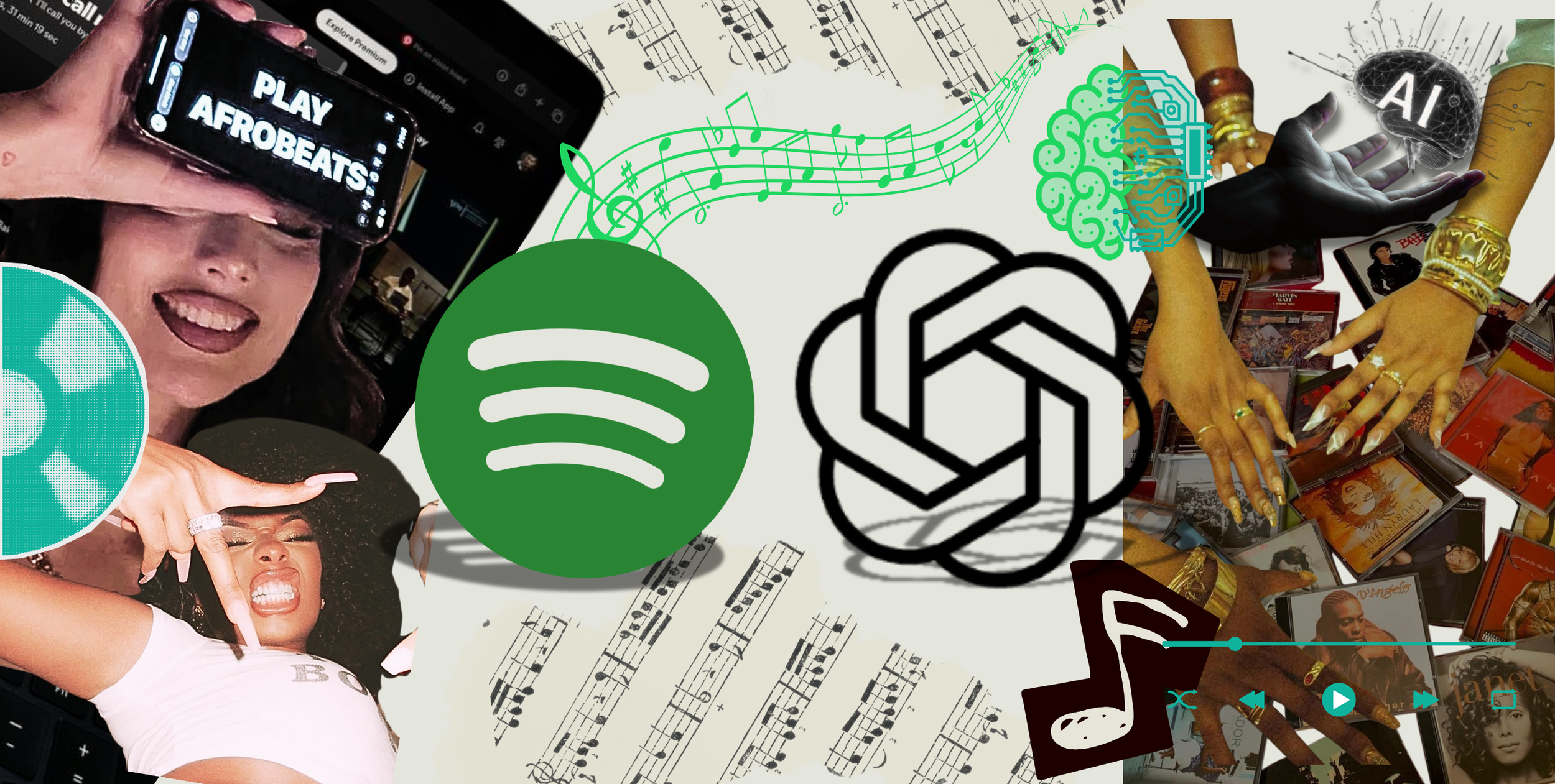
Fast-forward to now: Spotify has teamed up with OpenAI to take personalization to another level. You can literally talk to your playlist. Soon you’ll be able to tell ChatGPT what kind of mood you’re in and it will curate the perfect sonic experience for that moment. It’s smooth, it’s smart… but is it too smart?
When AI becomes the DJ
On the surface, this partnership feels like a dream. Ask for “a playlist that feels like Sunday brunch with soul and soft bass,” and Spotify gets it right. You don’t have to scroll, skip or guess. It just knows.
But that’s exactly where it gets complicated.
Because before AI, knowing what to play and when was a skill. It was emotional intelligence. DJs, tastemakers and radio hosts didn’t just read data; they read rooms. They felt the pulse of a crowd, the mood of a moment.
Can an algorithm do that?
Sure, AI can mix energy levels and tempo. But can it capture the soul of a set, the storytelling behind why a certain track follows another? And what happens to all the people who built careers on that instinct?
Are we trading artistry for accuracy?
The nostalgia of discovery
There’s a quiet kind of loss happening in real time. The same way streaming once replaced physical albums, AI curation might quietly replace the mixtape era, those carefully crafted blends that used to introduce us to our next favourite artist.
Back then, we followed DJs, blog curators, even Tumblr pages because of their taste. They weren’t machines, they were mood translators. People who knew how to turn feelings into soundtracks.
And now, we’re asking an algorithm to do the same. Maybe it can. But maybe that also means the next generation won’t stumble upon a hidden SoundCloud mix that changes their entire summer. Maybe they’ll just say, “Hey Spotify, play something that feels like summer.”
It’s efficient. But it’s also… sterile.
Gatekeepers vs. the new gods
Here’s the irony: the music and entertainment industry has always been curated, often by a few people at the top deciding what gets heard. AI could, in theory, democratize that. If done right, this partnership could remove some of those gatekeepers, giving smaller artists a fighting chance through unbiased algorithms and mood-driven discovery.
But that’s assuming AI is truly unbiased.
We’ve already seen what happens when technology learns from flawed systems, recommendation models that overrepresent certain genres, underexpose marginalized voices or fail to understand the cultural nuance behind why a song matters.
A machine can learn data, but can it learn culture? Can it understand the difference between “vibe” and “meaning”? Between a sample that nods to heritage and one that just sounds good?
That’s where the conversation gets bigger than music. It becomes about preservation of artistry, of emotion, of human touch.
The crossroads we’re standing at
So yes, AI-driven curation could make the user experience seamless.
Yes, it could make discovery more inclusive, removing the gatekeepers who’ve held control for decades.
But it could also blur the lines between appreciation and automation, between artistry and algorithm.
Maybe that’s the paradox we have to live with. Progress always comes with questions.
As OpenAI and Spotify redefine how we listen, we’ll have to ask ourselves: are we still hearing the music, or just being told what we want to hear?