Behind the remarkable silhouettes of Hertunba, Orange Culture and Fruché is a story of creative vision, craftsmanship and the importance of protecting both.
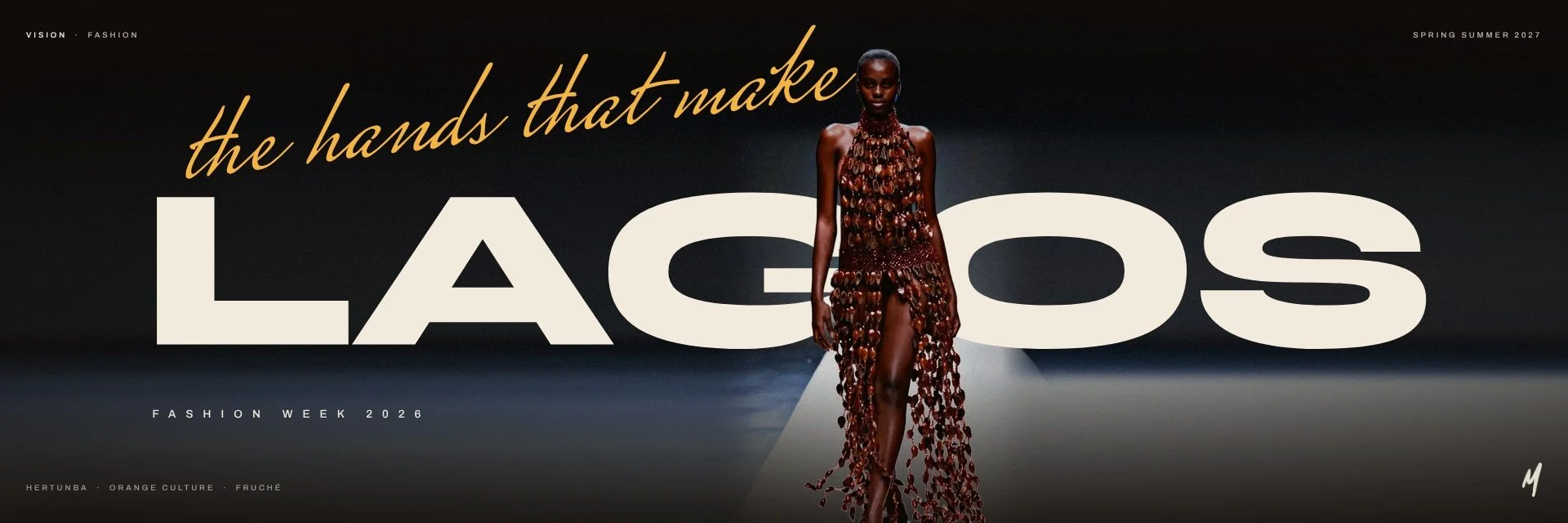
A wooden garment that announces itself before the model comes into view. Fringe that transforms with every step. Sheer fabrics and unconventional proportions that challenge the very idea of how we're supposed to dress.
Lagos Fashion Week SS2027 offered plenty to look at. Some of its most interesting moments invited us to look a little closer.
Behind the spectacle were designers rethinking familiar silhouettes, artisans working with materials that carry generations of knowledge and craftspeople turning ambitious ideas into wearable realities.
While the runway tends to give us one name to remember, the label, the making of a collection is rarely a one-person affair.
Three designers in particular caught our attention: Hertunba, Orange Culture and Fruché. Each approached the Spring/Summer 2027 season with a distinct creative language. What connects them isn't a shared aesthetic, but an understanding that how something is made can be just as compelling as how it looks.
HERTUNBA: When the Details Do the Talking
There's something satisfying about a garment that reveals itself in motion.
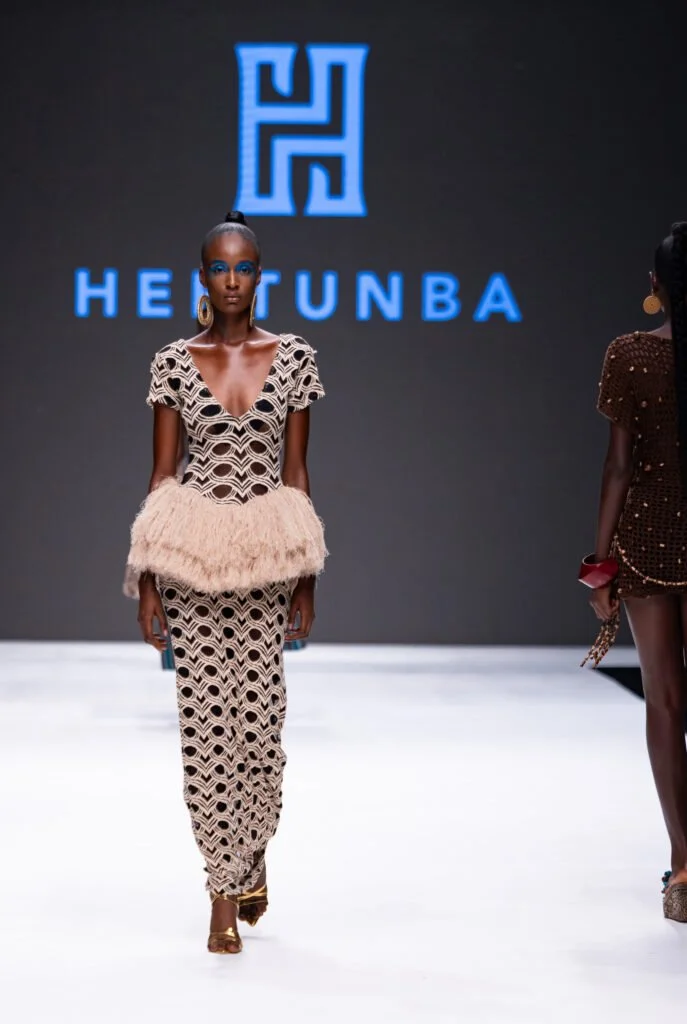
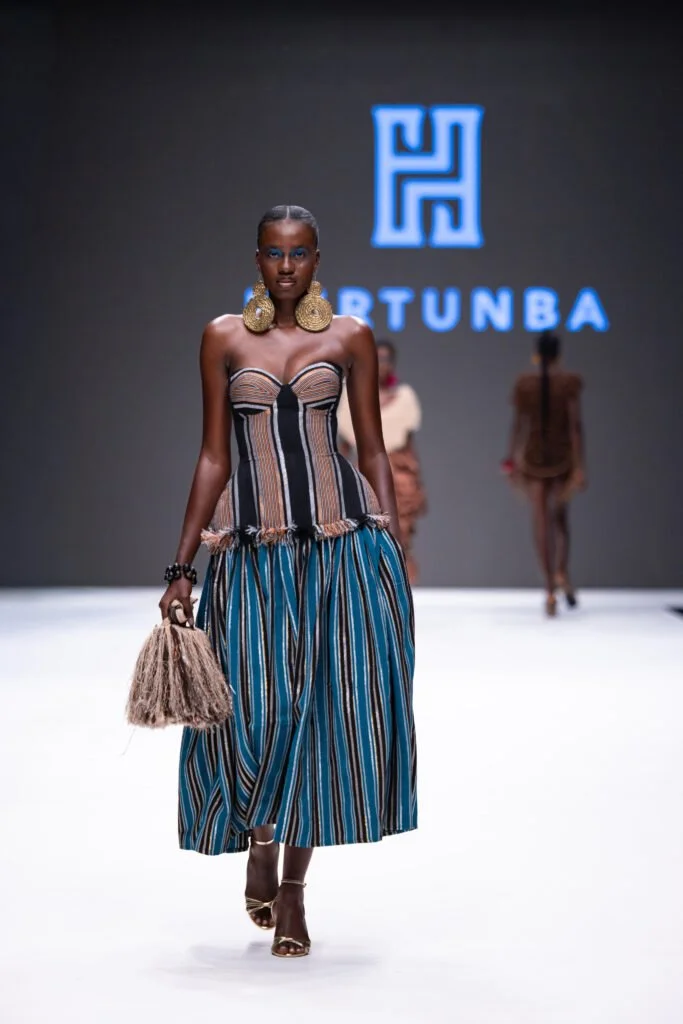
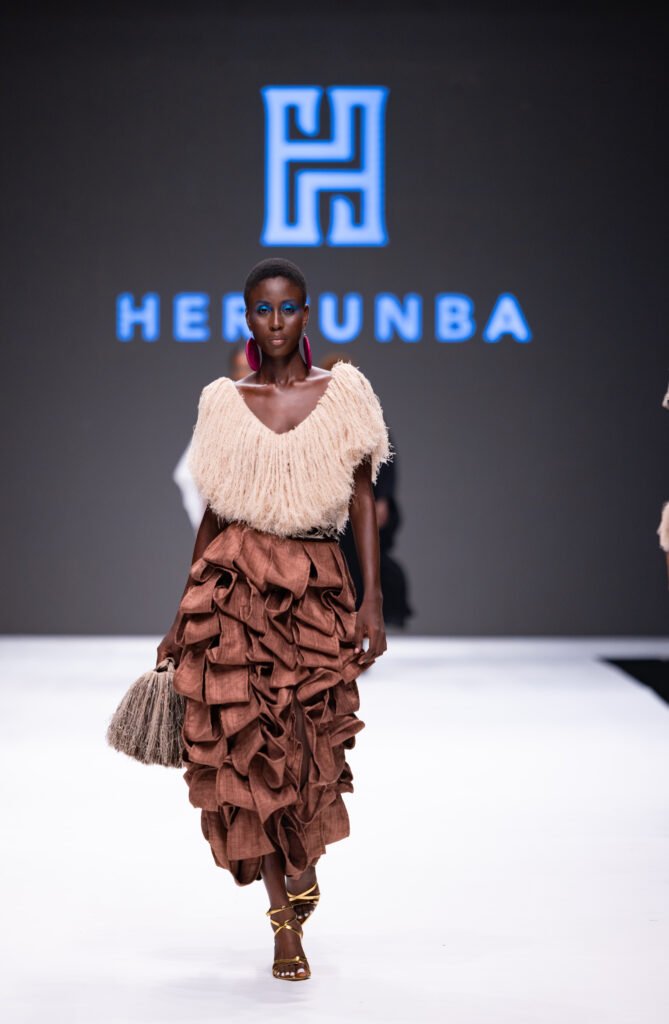
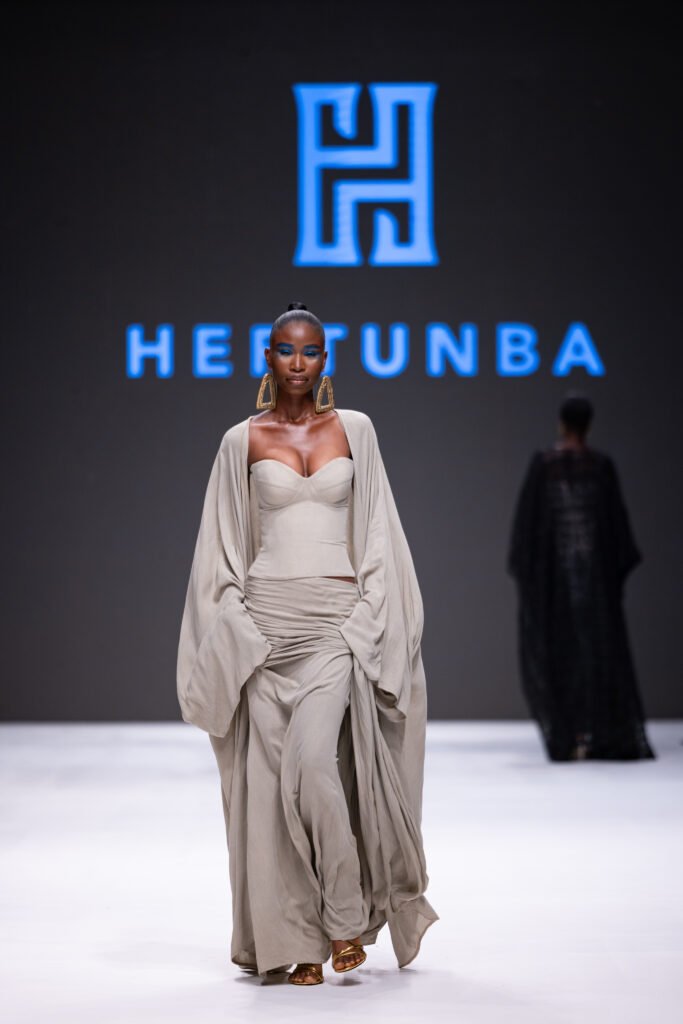
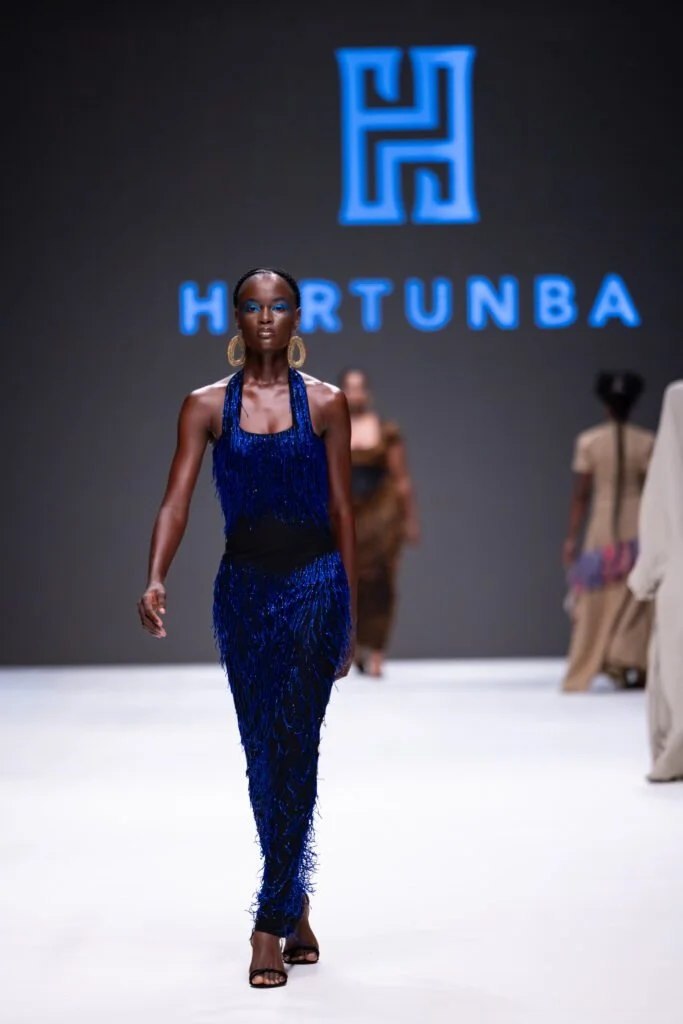
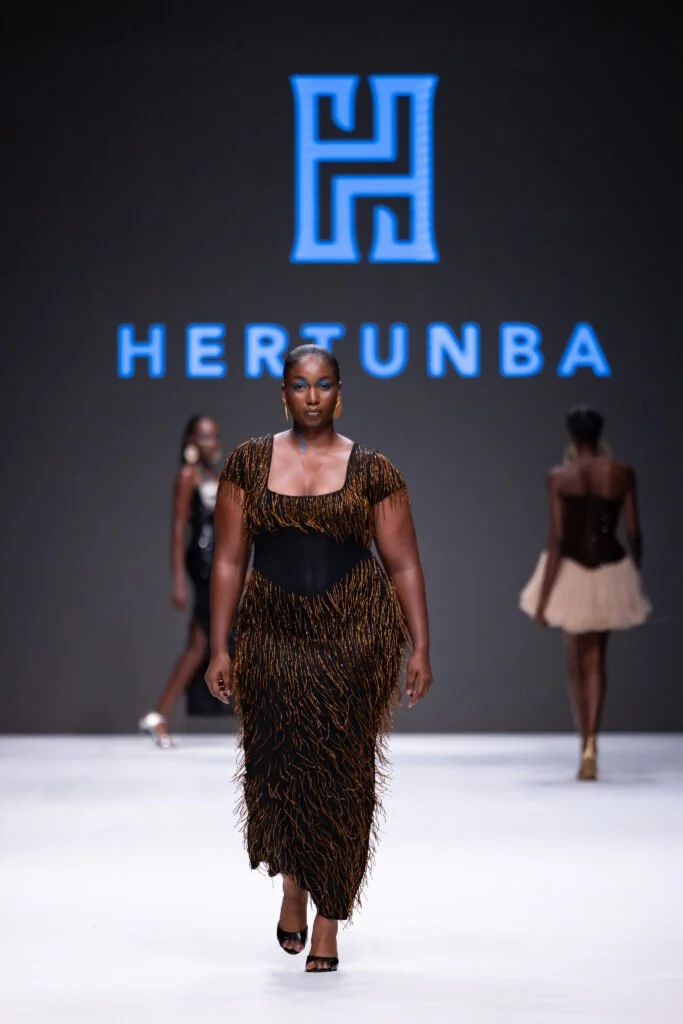
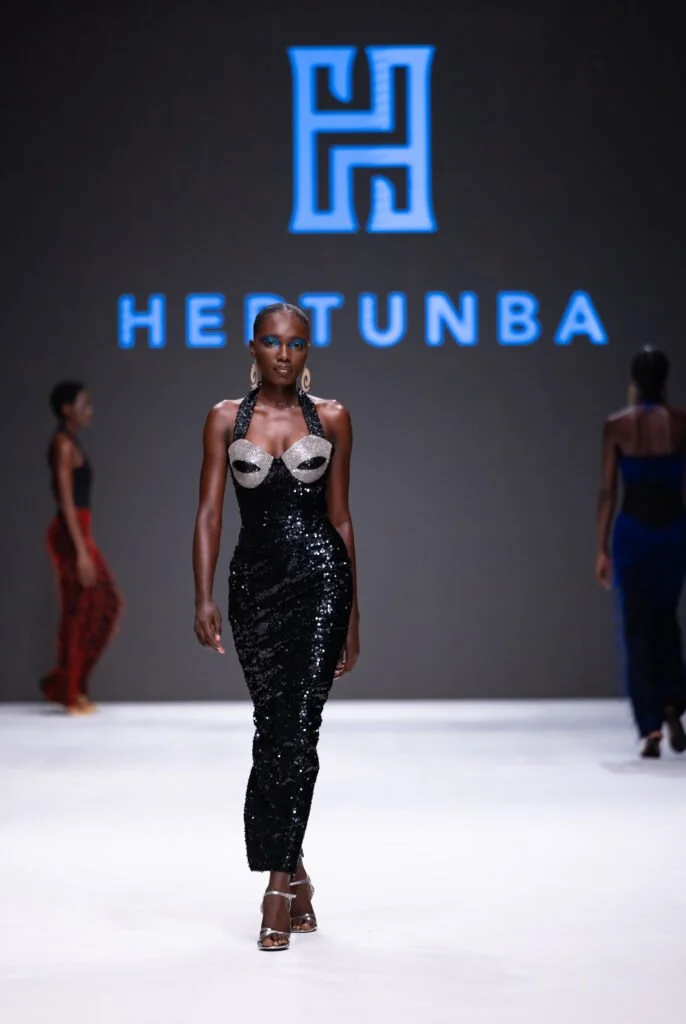
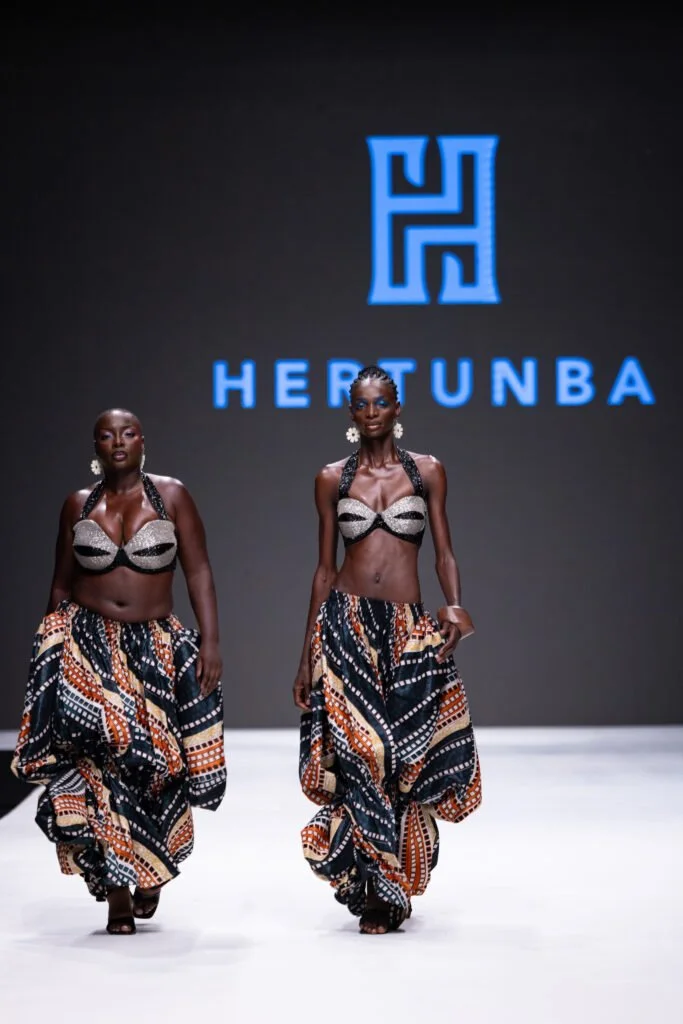
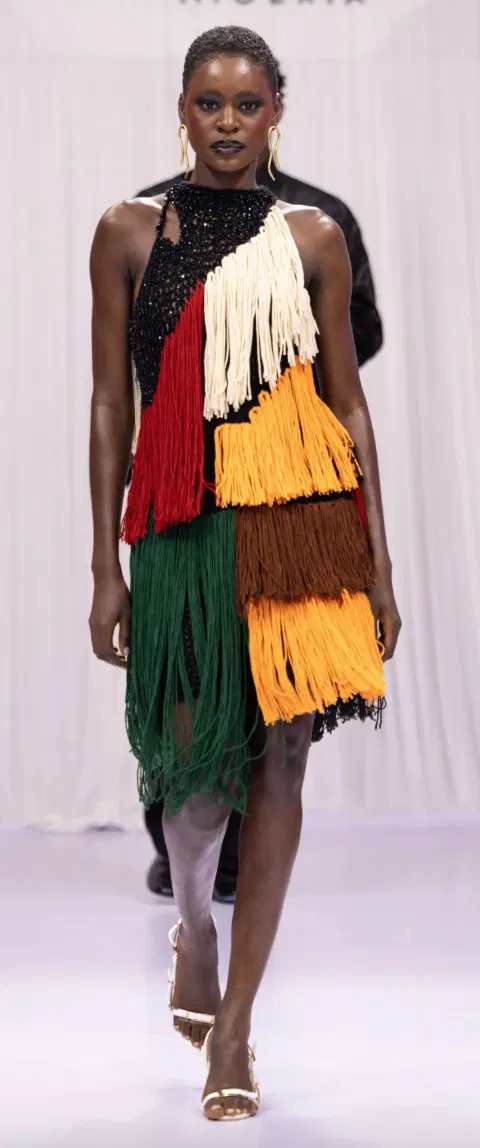
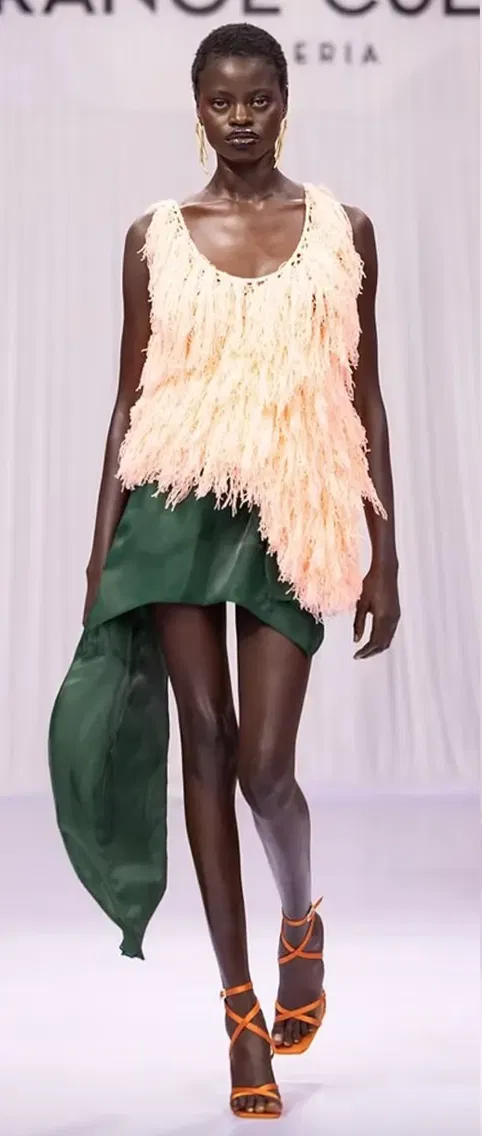
At Hertunba, fringe, intricate beading and sculptural silhouettes created pieces that seemed to have a personality of their own. The collection moved through rich browns, blues and blacks, with dropped waists and carefully considered proportions giving the clothes their distinctive shape.
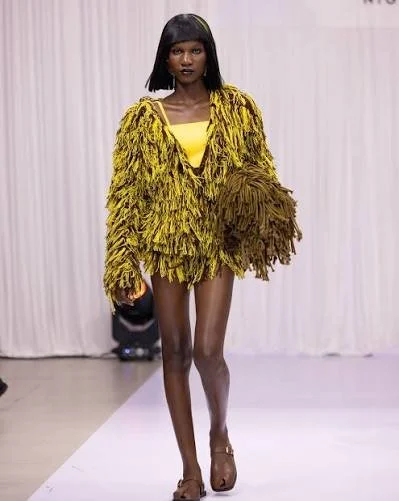
Fringe is an interesting design choice. Too much and it becomes costume. Too little and it risks becoming decoration. Hertunba's treatment made it part of the garment's visual language, adding movement and texture without losing the underlying structure.
But the story becomes more interesting when you consider who's making the clothes.
Founded by Florentina Agu in 2020, Hertunba has made the training and employment of local women part of its production model, particularly in sewing and weaving. The label also works to reduce textile waste by repurposing excess materials into new garments and interior pieces.
It's a reminder that craftsmanship isn't simply an aesthetic to reference in a collection description. It's a skill someone has spent years developing. And for that skill to survive, it needs opportunities to be practised, passed on and paid for.
Hertunba's work makes a convincing case for fashion that considers both the finished garment and the people responsible for bringing it into existence.
ORANGE CULTURE: The Art of Being In Between
Fashion has always loved a category. Menswear. Womenswear. Formal. Casual. Masculine. Feminine.
Orange Culture has never seemed particularly interested in staying inside one.
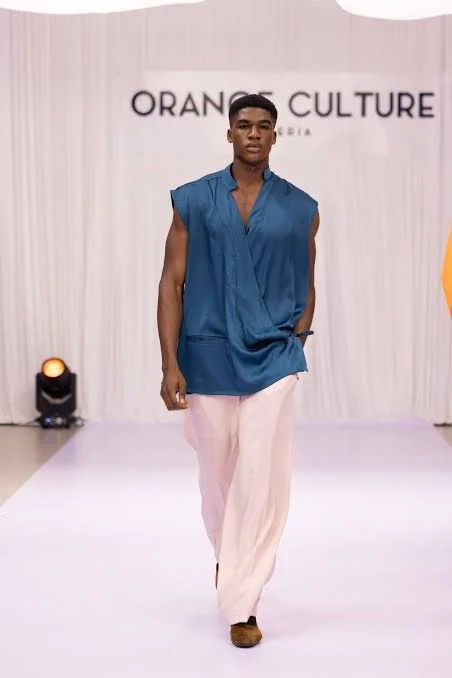
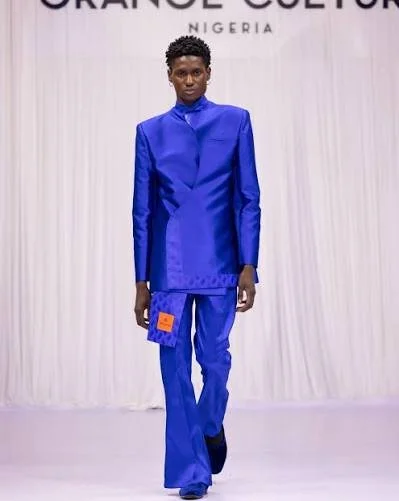
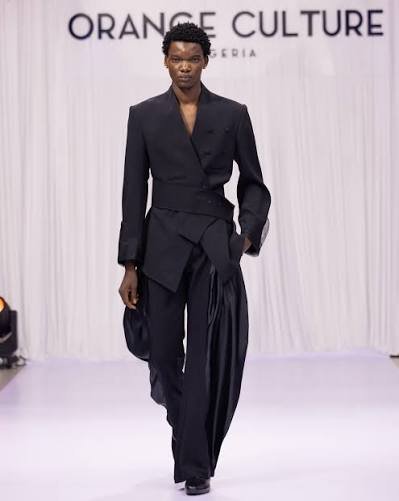
For SS2027, Adebayo Oke-Lawal presented The In-Between, a collection exploring the possibilities that emerge when familiar distinctions begin to lose their importance.
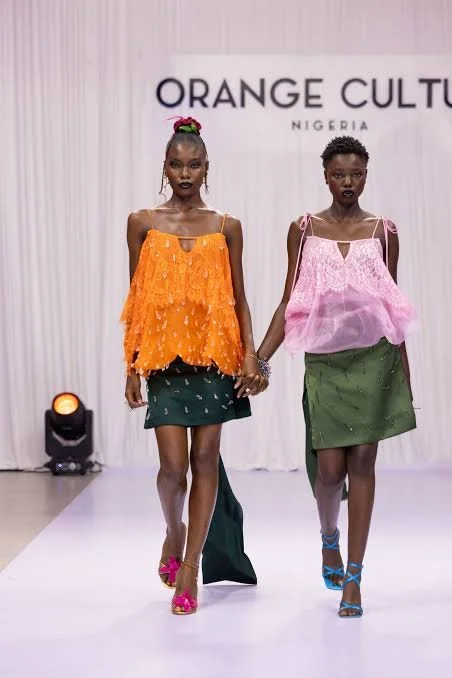
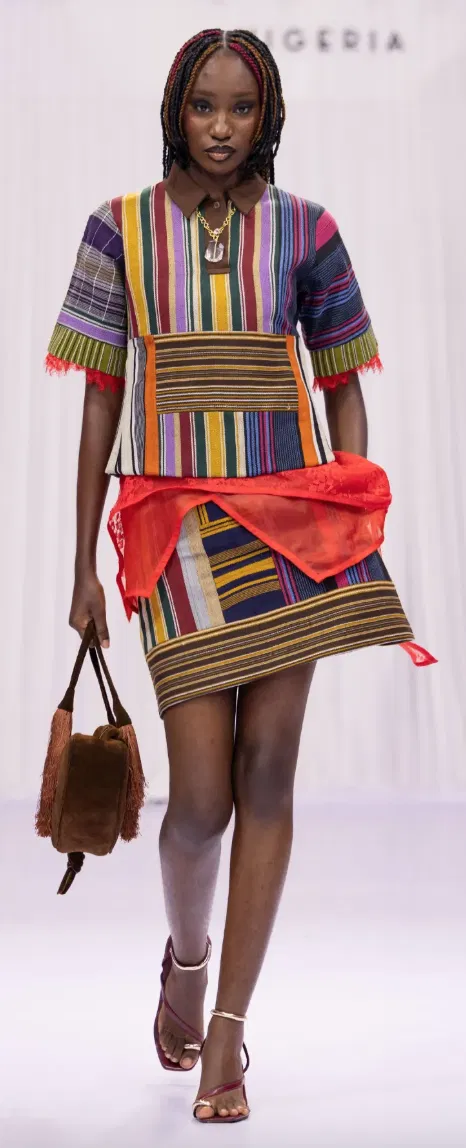
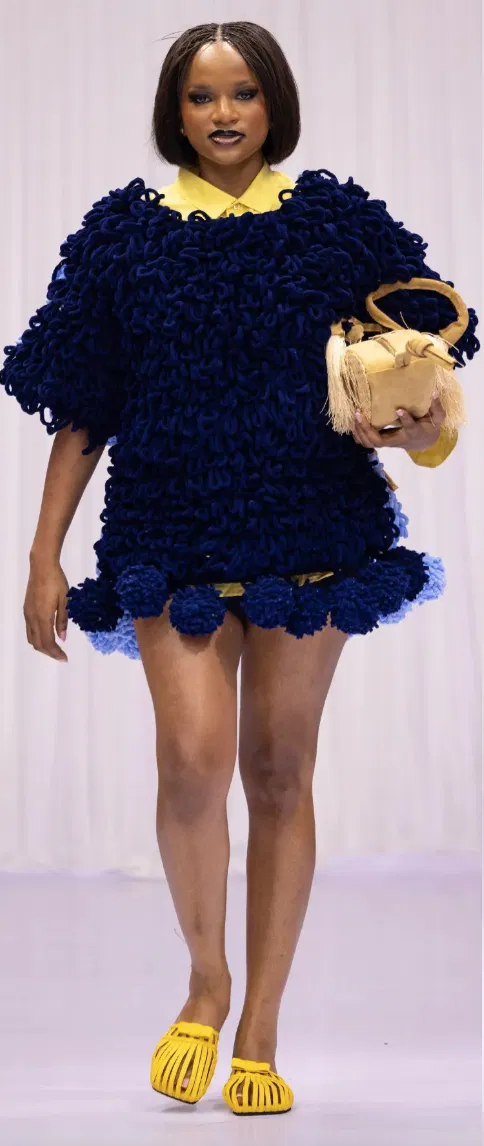
Sheer layers met more structured pieces. Asymmetrical proportions disrupted conventional silhouettes. Hand-stitched embellishments and looped-yarn finishes introduced unexpected texture to garments that might otherwise have felt familiar.
What makes the collection interesting isn't simply its rejection of traditional gender codes. It's how that perspective translates into the clothes themselves.
A transparent layer can change the character of tailoring. An uneven hem can make a familiar silhouette feel entirely new. A carefully placed embellishment can shift the balance between restraint and expression.
These are design decisions, not just statements.
Since establishing Orange Culture in 2011, Oke-Lawal has built a creative identity around freedom of expression and a fluid approach to dressing. The In-Between continues that exploration without requiring every garment to announce its intentions.
There's something refreshing about clothes that allow contradictions to coexist.
Softness and structure. Exposure and concealment. Familiarity and experimentation.
Perhaps the most interesting thing about being in between is discovering how much creative freedom exists there.
FRUCHÉ: Making the Familiar Unfamiliar
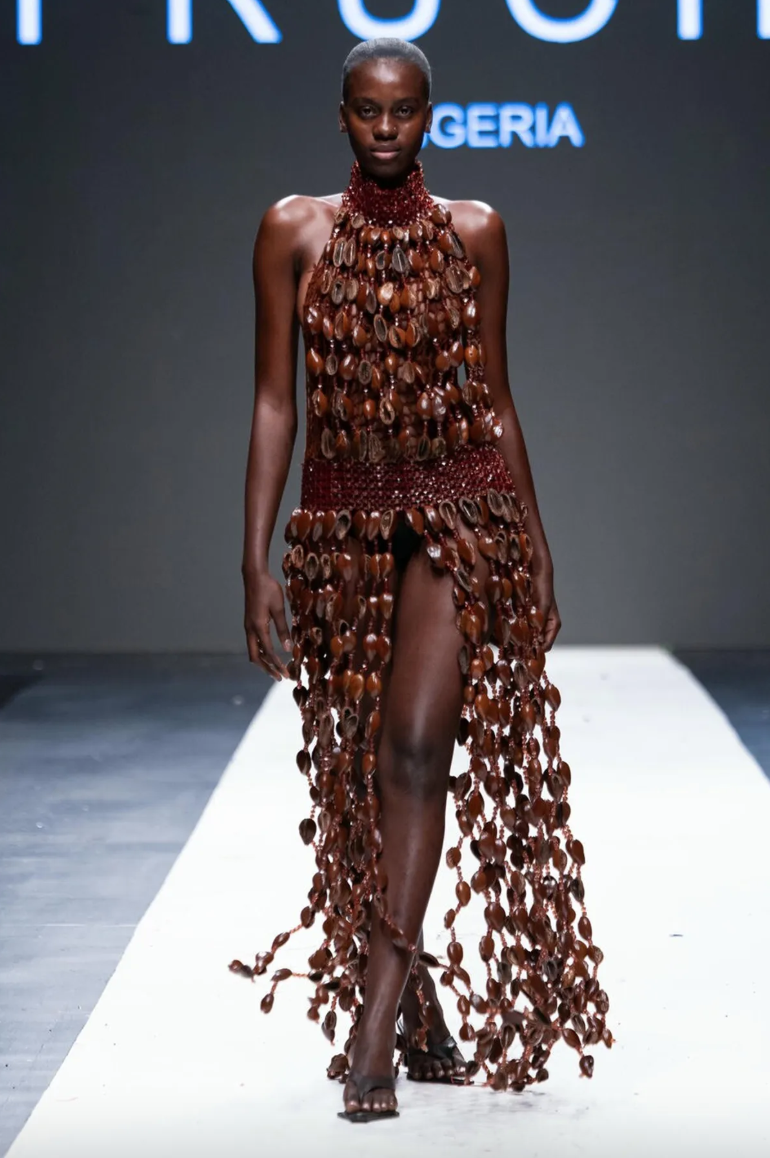
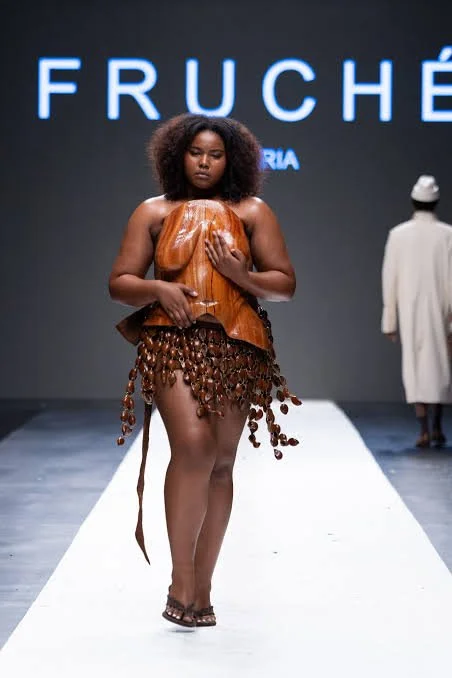
You could hear Fruché's final look before you could fully appreciate it.
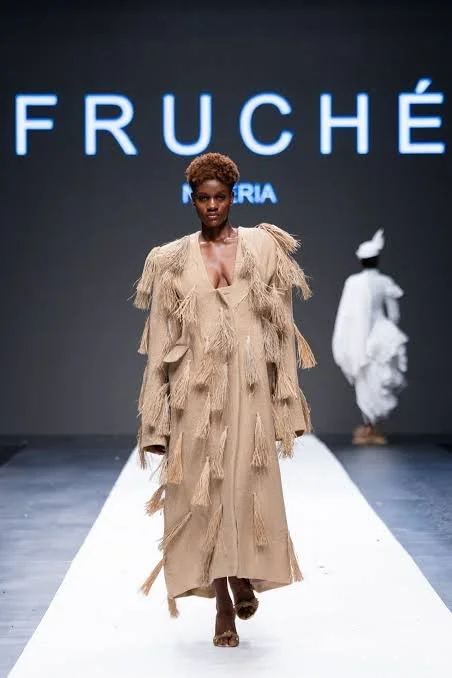
As a model walked the runway wearing a garment constructed from carved wooden elements, the pieces brushed against one another, creating a sound that became part of the presentation.
For a moment, the clothing wasn't simply something to look at. It was something to listen to.
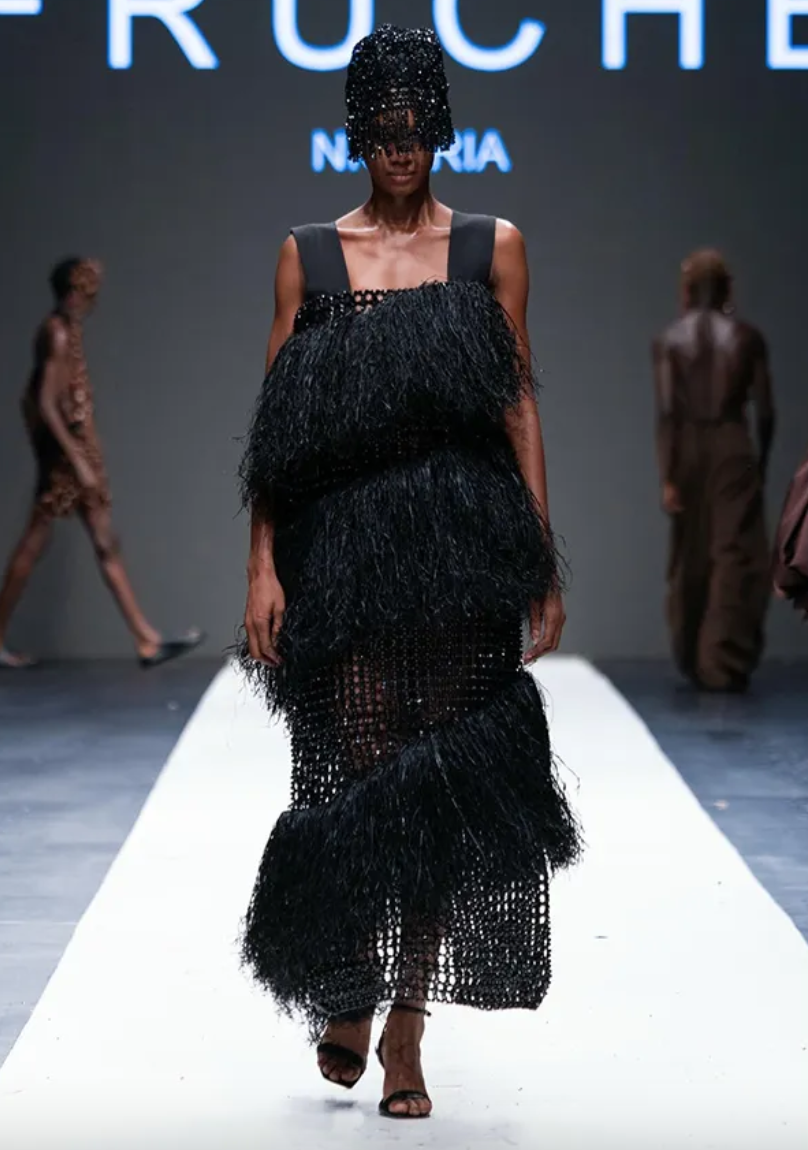
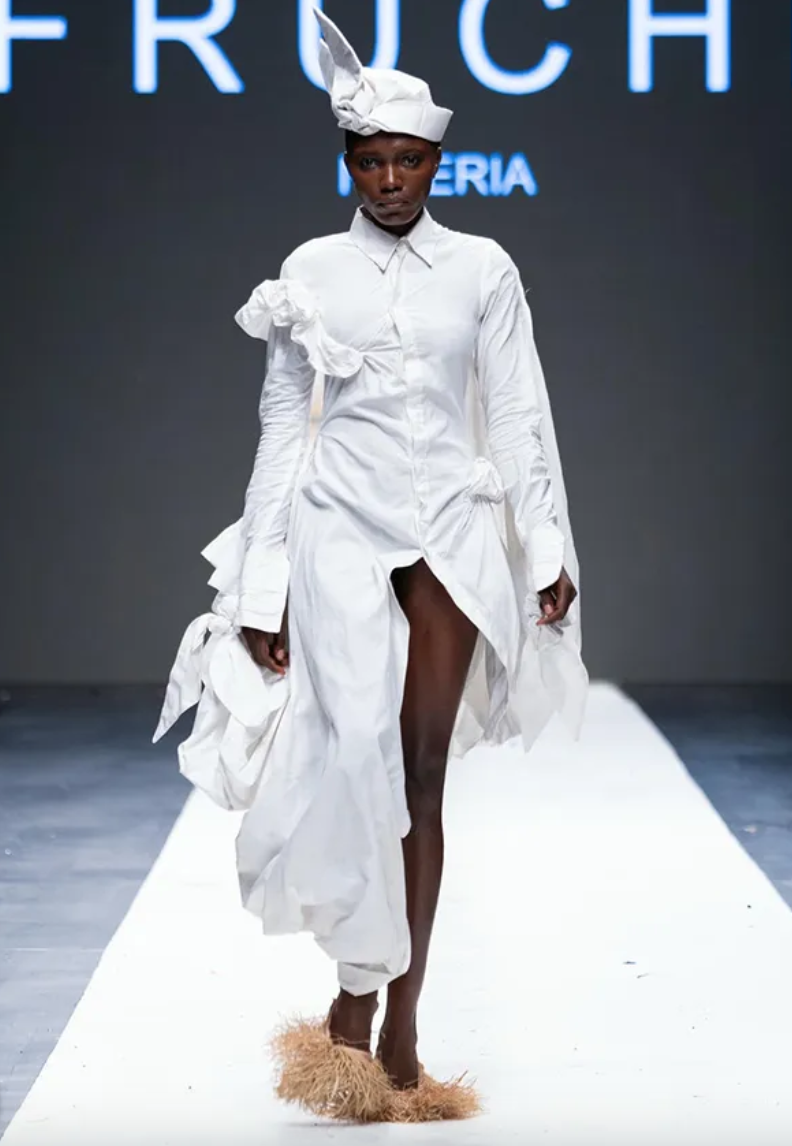
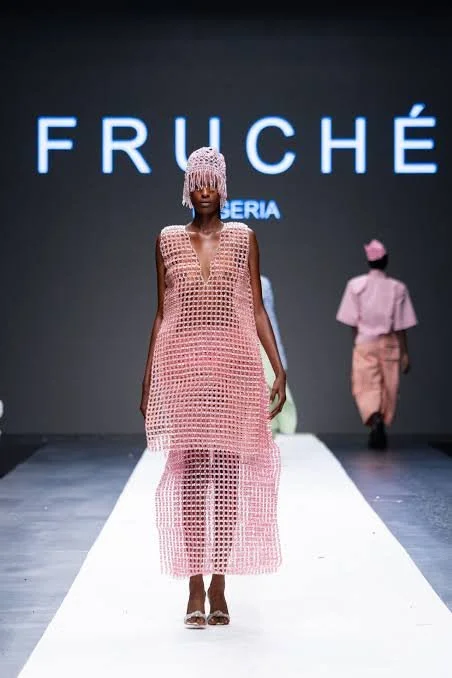
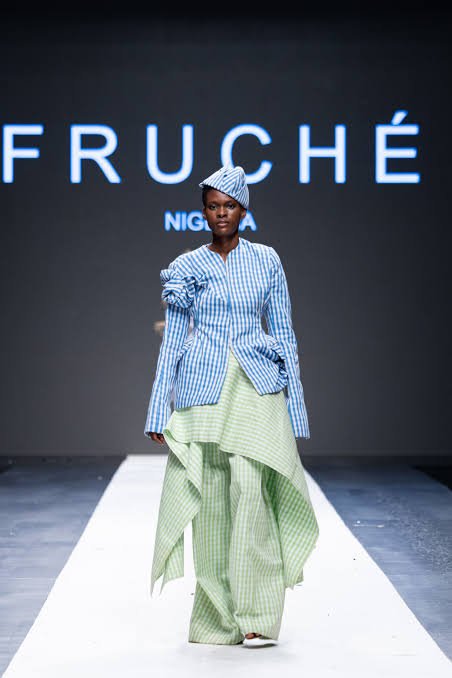
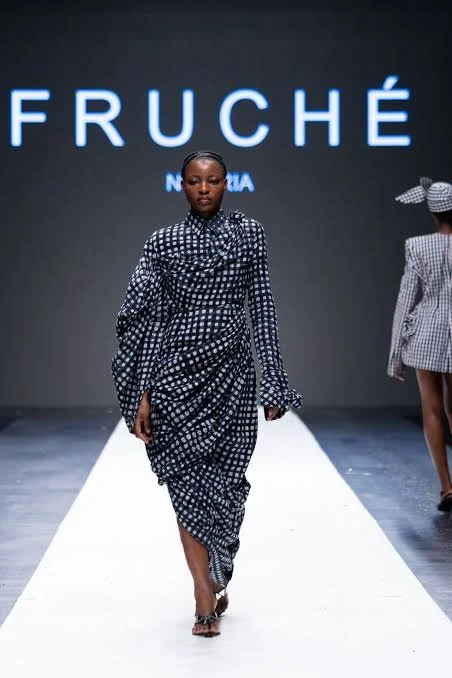
Frank Aghuno's SS2027 collection, KLEG, found inspiration in familiar territory: boarding school uniforms, gingham fabrics and imperfections that make things distinctive. The results were anything but ordinary.
Gingham appeared in cotton, aso-oke, beaded treatments and adire, the traditional resist-dyeing technique. Elsewhere, carved wooden elements introduced unexpected volume, texture and movement.
The collection's experimentation was especially interesting because it wasn't limited to appearance. Aghuno worked with Nigerian artisans to develop its materials and garments, sourcing cotton from Katsina and collaborating with local craftspeople, including woodcarvers.
His twin brother, artist Dricky, also contributed hand-painted artwork to garments in the collection.
It's the kind of creative collaboration that complicates the idea of a fashion designer working alone.
The designer provides the vision, but the execution requires an entirely different set of expertise. Understanding how wood behaves, how fabric holds its shape or how a traditional textile can be adapted into an unfamiliar silhouette demands knowledge that can't simply be sketched onto a page.
And there's a certain confidence in allowing the natural irregularities of handmade materials to remain visible.
In a fashion industry often preoccupied with perfection, Fruché made an argument for the beauty of things that resist uniformity.
The result was playful, technically ambitious and unmistakably individual.
The Names Beyond the Label
There's a familiar ritual at the end of a runway show.
The designer emerges, takes a bow and receives the applause.
It's a deserved moment. But behind that recognition sits an entire network of creative labour. Pattern cutters, tailors, weavers, dyers, embroiderers, textile specialists and artisans each bring expertise that can determine whether a design remains an idea or becomes something extraordinary.
And in a city like Lagos, where tailoring and textile traditions remain deeply embedded in fashion culture, those skills are an essential part of the industry's creative identity.
What's particularly compelling about designers such as Hertunba and Fruché is their visible commitment to working with local makers. That relationship deserves attention beyond the occasional mention of craftsmanship in a collection review. Who developed the textile? Who carved the embellishments? Who spent hours perfecting the construction? What techniques were inherited, adapted or invented along the way?
These are the questions that make the finished garment even more interesting. Because understanding how something came to exist doesn't diminish the designer's vision. It gives us a greater appreciation of what that vision required.
Beautiful Work Deserves More Than Applause
There's another conversation worth having when discussing creative work of this calibre.
Ownership.
As African designers and textile traditions continue to attract international attention, questions about intellectual property, cultural attribution and creative protection become increasingly relevant.
The Fashion Law Africa Summit (TFLAS) is among the organisations working in this space. Through initiatives including the African Textile Cultural Ownership Initiative (ATCO), its work addresses the documentation, recognition and protection of African textile heritage.
ATCO's approach is particularly relevant because it considers cultural knowledge alongside legal ownership, recognising that traditional textile techniques and patterns often exist within communities rather than belonging neatly to a single individual.
That distinction matters.
The rights attached to an original garment design aren't necessarily the same as those associated with a traditional weaving technique or a pattern developed and maintained across generations. Protecting creative work requires understanding those differences, and ensuring that designers and communities have the knowledge and resources to navigate them.
It's a conversation we've explored before in reMARK's We Made It Cool. We Just Don't Own It.
And it feels particularly relevant here.
When we admire a textile, a sculptural garment or an unexpected use of traditional materials, we're also witnessing the value of knowledge, experimentation and creative labour. Recognition is important. So is ensuring that the people responsible can benefit from what they've created.
Worth a Closer Look
The appeal of Lagos Fashion Week isn't difficult to understand. The clothes are interesting. The designers have distinct points of view. The creative possibilities seem wonderfully unconcerned with playing by anyone else's rules.
But the most memorable collections offer something beyond a striking image.
Hertunba reminds us that texture and movement can carry a design as powerfully as silhouette. Orange Culture finds freedom in refusing to choose between familiar categories. Fruché turns materials and memories into something unexpected, making the process of creation part of the experience.
Different approaches. Different perspectives. All worth paying attention to. Perhaps that's the real pleasure of looking more closely.
You begin with a garment that catches your eye. You leave with an appreciation for the hands, ideas and knowledge that made it possible.
The runway lasts a few minutes. The work behind it deserves a much longer look.