WE MADE IT COOL. WE JUST DON'T OWN IT.
The culture travels. The origin doesn't.
That's the pattern. It plays out the same way every time, across every community, in every corner of the world where Black and Brown and Asian and Indigenous and Latino people have built something worth wanting. The aesthetic gets lifted. The story gets stripped. The thing gets a new name. And by the time it's "trending," it's already in a press release with someone else's logo on it.
It's henna at Coachella being called a "boho temporary tattoo." It's bindis sold at festival stalls by people who couldn't tell you what they mean. It's cornrows renamed boxer braids the moment a Kardashian wears them. It's bachata workshops run by instructors who've never set foot in the Dominican Republic. It's "banh mi" getting a Michelin star the moment a non-Vietnamese chef touches it.
The names change. The mechanism doesn't.
WHAT ACTUALLY GETS ERASED
The price tag changes too. The pattern doesn't.
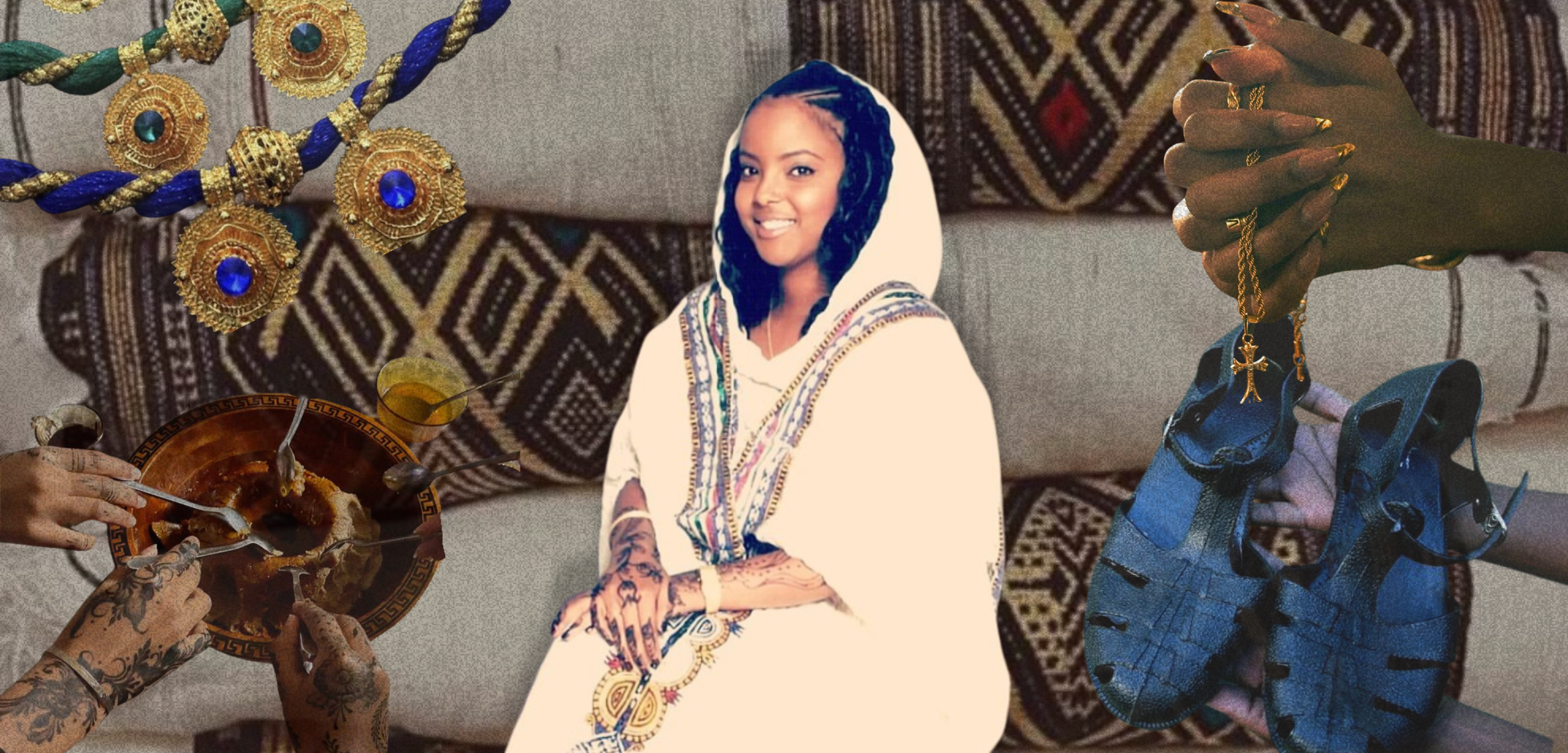
At one end, you have Urban Outfitters. Almost ten years ago, I was scrolling through their website and I stopped cold. There was a zuria, a traditional Eritrean and Ethiopian dress, on a model with no connection to the culture. Styled incorrectly. No context. No acknowledgement of where it came from or what it meant. The description read: linen dress. That was it. Two words. Buried between hundreds of other looks like it had been plucked from thin air.
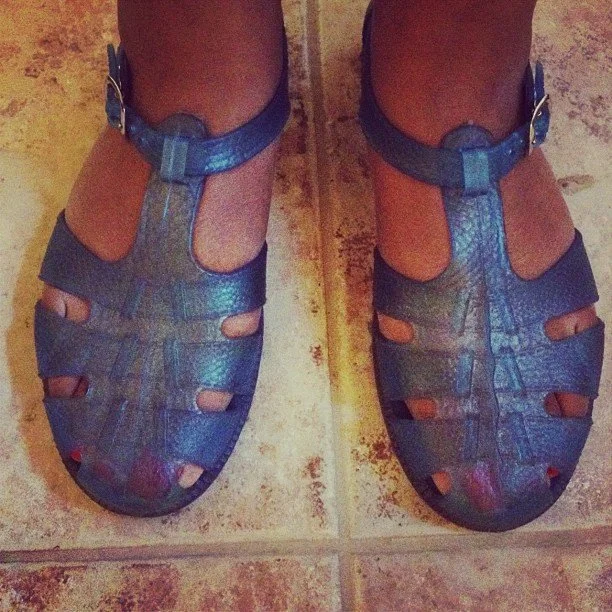
At the other end, you have the luxury houses. The Shida (also known as the Kongo) is a rubber sandal originally made from old vehicle tyres. It was worn by Eritrean freedom fighters throughout a 30-year war for self-determination. They wore it climbing mountains, surviving deserts, fighting for a country that didn't yet officially exist. After liberation it became something more than footwear,. It was a symbol of dignity, resilience, and national pride, carved out of necessity and worn with intention. Gucci adopted the design. Chanel and Moschino followed the silhouette. For the global fashion scene it was simply another seasonal offering, an interesting rubber sole, a clean strap, a striking shape. For Eritreans watching, it was something else entirely.
Two very different price points. The exact same erasure. What made the zuria listing hit differently for me wasn't just that they got it wrong. It was what I knew was behind it.
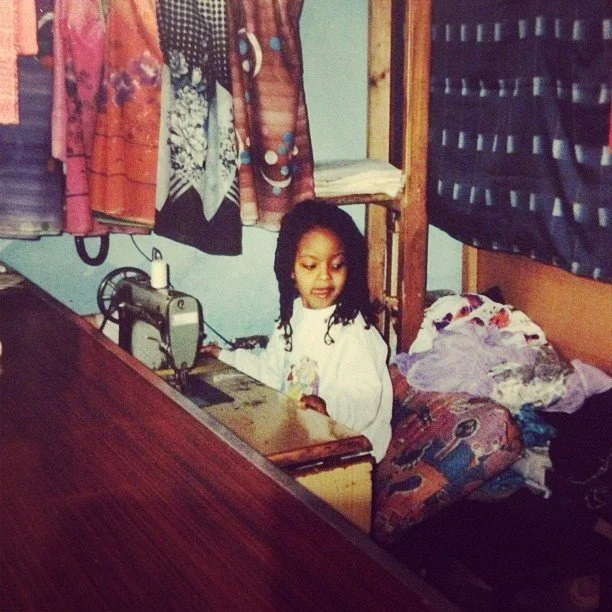
My grandfather ran a tailor shop. My father and his siblings grew up in it learning the measurements, the fabric, the patience the work demands. The craft wasn't just a trade in our family, it was a language. One of the ways love got communicated without always needing words. Growing up, my mother would light up getting us ready in matching zurias, ones made by my family’s hands that had learned from hands before them. I wore them as a child knowing, even then, that what I had on was connected to something far bigger than fabric. The thread ran straight back to my grandfather's shop floor.
So when I saw that listing, I wasn't just looking at a misidentified garment. I was looking at my grandfather's legacy reduced to a product description. Generations of craft, of intention, of a family's identity distilled into two words by someone who never had to think about any of it.
Linen dress will do just fine.
And a Shida repackaged as a luxury rubber sandal will do just fine too. Because when no one in the chain has enough power or platform to say that's not what this is, from a mass market retailer to a fashion house in Milan, the price point is the only difference. The indifference is identical.
BUT HERE’S THE PART WE DON’T SAY LOUD ENOUGH
We celebrate when it crosses over.
We share the article. We repost the runway show. We take it as a sign of progress, look, we made it, before we even pause to ask who's profiting. The extraction doesn't just work because of the companies doing it. It works because somewhere along the way, we were taught that mainstream acceptance is the destination. That visibility is the same as value. That going viral is the same as winning.
It's not.
The South Asian designer whose textile made it to a major fashion week, in someone else's collection, hasn't won. The Black chef whose grandmother's recipe is now on a supermarket shelf with a different face on the label hasn't won. The Latino artist whose sound became the backbone of a genre their name isn't attached to hasn't won. The Eritrean artisan whose sandal sole became a luxury product without a single acknowledgement of where it came from hasn't won.
Visibility without ownership is just being used in a way that feels good.
SOMEONE IS TRYING TO CHANGE THAT
This is where it gets important and where most conversations about cultural appropriation stop too soon.
The Fashion Law Africa Summit (TFLAS) is doing the work that the outrage cycle never gets around to. They're not just naming the problem. They're building the infrastructure to actually address it equipping African designers with intellectual property education, brand protection tools, pro bono legal services, and business mentorship year round. Their African Cultural Textile Ownership Initiative (ACTO) works specifically to safeguard traditional techniques and the cultural stories woven into each design, so that what belongs to a community stays legally, structurally, and documentably theirs. They hold an annual summit. They show collections during New York Fashion Week. They operate at the exact intersection where the theft happens, law, business, and culture and they're asking the question most people are afraid to ask out loud: what would it actually take to make this harder to do?
Not just culturally. Legally. Not just morally. Structurally.
That's the conversation that deserves more of our attention. Because the outrage comes, it trends for a few days, and then it evaporates. The product stays on the shelf. The campaign runs its full season. And the community that built the thing that got taken is left with the cultural credit and none of the financial reward.
AND NOW THERE’S A NEW CONVERSATION STARTING
I've noticed a shift. Across communities, there's a growing push toward gatekeeping and holding certain things closer, not sharing everything, letting some things belong only to the people they belong to. And it's making people uncomfortable. On both sides.
So I want to sit in that discomfort for a second, because I don't think either side is fully reckoning with what the question actually asks.
What does it mean to gatekeep your culture? Does it mean refusing to share? Refusing to teach? Refusing to collaborate? Or does it mean demanding that when you do share, the exchange is honest, credited, compensated, contextualized?
And if we begin to gatekeep, what are the implications? Does it protect the culture or does it calcify it? Does it preserve the meaning or just delay the extraction? Can you actually stop a trend? Or does the gatekeeping itself become the content…documented, reposted, consumed by the very audience you were trying to keep it from?
Who decides what counts as gatekeeping and what counts as protection? Because the line between the two depends entirely on who's drawing it and who's standing on the outside looking in.
I don't have a clean answer. I don't think there is one.
What I know is that a zuria is not a linen dress. A Shida is not a rubber buckle strap sandal. And the people who called them those things made small, efficient, thoughtless decisions…not out of malice, but out of indifference. Which, depending on the day, feels worse.
Those decisions were possible because nobody with any real connection to those cultures had enough power in the chain to say: no. That's not what this is. That's not all this is.
That's the thing worth sitting with.
Not just what they took. But what we'd need structurally, financially and institutionally to be in a position where they couldn't. Organisations like TFLAS are building toward that answer. The question is whether the rest of us are paying enough attention to show up for it.